How to Choose the Right Diamond Blade for Your Material
By Devgon Industries ·
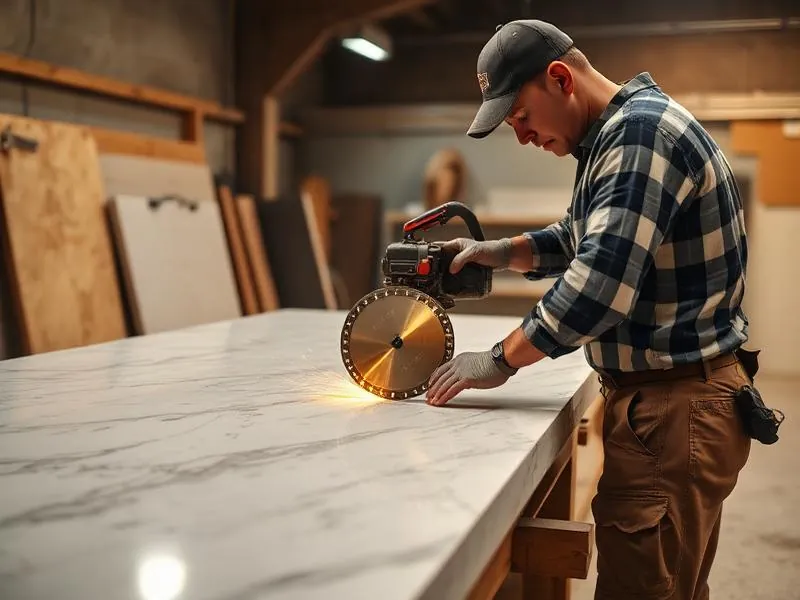
A diamond blade is not a universal tool. The same blade that cuts granite cleanly can chip porcelain, burn engineered quartz, or glaze over on hard concrete. For Canadian fabricators and contractors, choosing the right blade is the single biggest factor in cut quality, blade life and cost per cut.
This guide walks through how professionals choose a diamond blade: by material first, then rim type, bond, and finally the tool it will run on.
Start with the material, not the saw
Every diamond blade is a balance between the diamonds that do the cutting and the metal bond that holds them. As the blade cuts, the bond wears away and exposes fresh diamonds. The material you cut decides how fast that bond should wear.
The bond rule every fabricator should know
Hard, dense materials need a soft bond. Granite, porcelain and ultra-compact surfaces barely wear the bond, so a soft bond releases dull diamonds and exposes sharp ones. A hard bond on these materials glazes over and stops cutting.
Soft or abrasive materials need a hard bond. Marble, limestone, fresh concrete and asphalt wear the bond quickly. A hard bond holds the diamonds longer, so the blade does not wear out prematurely.
Get this rule right and most blade problems disappear.
Understand the three rim types
| Rim type | Cut quality | Speed | Best for |
|---|---|---|---|
| Continuous rim | Smoothest, least chipping | Slower | Porcelain, glass, ceramic tile, marble |
| Turbo / mesh turbo | Clean with good speed | Fast | Granite, quartz, natural stone, porcelain (mesh turbo) |
| Segmented | Rougher edge | Fastest, best cooling | Concrete, masonry, brick, rough stone cuts |
Material-by-material guide
Granite and quartzite
Granite is hard and moderately abrasive. Use a soft-to-medium bond turbo blade for grinders and a dedicated bridge saw blade for slab work. Natural quartzite is often harder than granite and can need a premium blade. Browse our natural stone blades and bridge saw blades.
Engineered quartz
Engineered quartz combines quartz aggregate with polymer resin. Heat is the enemy: a dull blade or poor water flow can scorch the resin and leave burn marks. Use a blade rated for engineered stone, keep water flowing to the cut, and do not force the feed.
Marble, limestone and travertine
These are softer stones. A harder bond lasts longer, and a continuous or fine turbo rim gives the clean edge visible marble work demands.
Porcelain tile and slabs
Porcelain is hard, dense and brittle. Use a thin, continuous or mesh-turbo rim sintered blade with a soft bond, and slow down on entry and exit to prevent chipping. See our porcelain blades.
Dekton, Neolith and ultra-compact surfaces
Ultra-compact surfaces are among the hardest materials fabricators work with. They need blades engineered specifically for ultra-compact material, consistent water flow and a reduced feed rate. Explore our Dekton and ultra-compact blades.
Concrete and masonry
Cured concrete with hard aggregate cuts best with a softer-bond segmented blade. Fresh (green) concrete and asphalt are highly abrasive and need a harder bond, often with undercut protection on the segments. For reinforced concrete, choose a blade rated for rebar. See our concrete blades.
Glass and glass mosaic
Glass needs a very fine grit continuous rim blade and must be cut wet. Standard tile or stone blades will shatter the edge. See our glass blades.
Match the blade to your tool
Once you know the material, confirm three things before ordering:
- Diameter: 4 to 5 inch for most angle grinders, 7 to 10 inch for tile saws, and 14 to 16 inch for most bridge saws.
- Arbor: Most North American angle grinder blades use a 7/8 inch (22.23 mm) arbor. Bridge saws commonly use 50 mm or 60 mm arbors. Check your saw before ordering.
- Maximum RPM: Never run a blade faster than the RPM printed on it. A blade over its rated speed is a serious safety hazard.
Wet or dry cutting?
Wet cutting cools the blade, extends diamond life, gives cleaner edges and controls dust. It is the standard for bridge saws, tile saws and any slab work. Dry blades are designed for short, intermittent cuts on jobsites where water is impractical. Cut in short passes and let the blade cool between them.
Signs you are using the wrong blade
- Blade stops cutting and feels smooth: glazing. The bond is too hard for the material. Dress the blade on an abrasive block or switch to a softer bond.
- Chipping on the exit edge: rim is too aggressive or feed is too fast. Use a continuous or mesh turbo rim and slow down.
- Blade wears out very fast: bond is too soft for an abrasive material.
- Burn marks on quartz: heat build-up. Increase water flow and check for a dull blade.
Do not forget silica safety
Cutting stone, quartz, porcelain and concrete releases respirable crystalline silica dust. Wet cutting, dust extraction and proper respiratory protection protect your crew. Follow your provincial occupational health and safety requirements for silica exposure.
Frequently asked questions
Can one diamond blade cut every material?
General-purpose blades exist, but they compromise on cut quality and life. Professionals use a dedicated blade for each main material they cut regularly.
Why did my new diamond blade stop cutting?
It has most likely glazed, meaning the bond is too hard for the material. Dress it by making a few cuts in an abrasive block, then reassess whether a softer bond blade is the right choice.
Is a more expensive diamond blade worth it?
For shop and production work, usually yes. A quality blade often costs less per cut because it lasts longer and wastes less material through chipping.
Need help choosing?
Compare the exact product’s listed materials and machine requirements before selecting tooling. Contact us with any questions. Request a quote or browse our full range of diamond cutting blades.