How to Choose the Best Diamond Blade for Cutting Concrete
By Devgon Industries ·
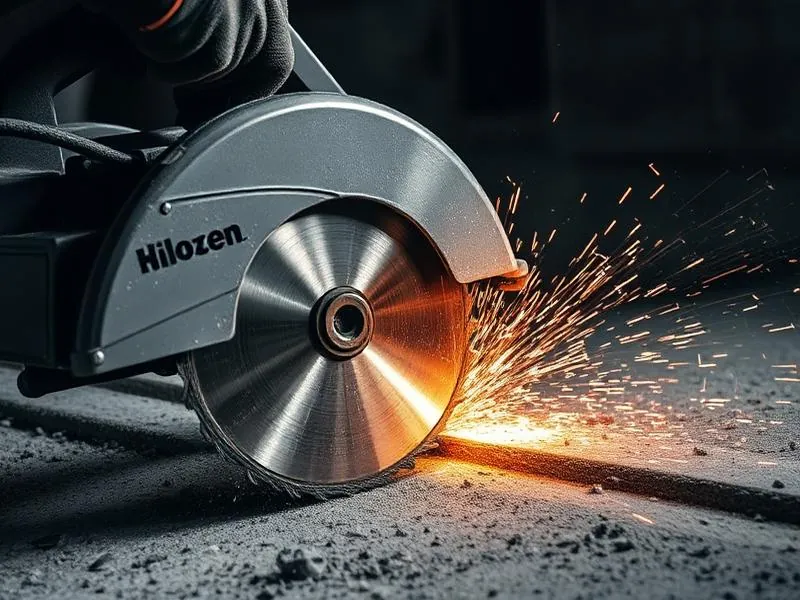
Ask ten contractors which concrete blade is best and you will get ten answers, because the right blade depends on the concrete in front of you. A blade that flies through one slab can glaze on the next, or wear out in a day on fresh concrete.
This guide explains what actually decides concrete blade performance, so you can match the blade to the job instead of guessing.
Know your concrete first
Two things about the concrete matter most:
- Aggregate hardness: the stone mixed into the concrete. Hard aggregate such as granite or trap rock is tough on diamonds. Softer aggregate such as limestone cuts more easily. Aggregate varies by region and by supplier, so the same blade can perform differently from one job to the next.
- Abrasiveness and age: cured concrete is hard. Green, freshly poured concrete is soft but very abrasive because of loose sand and cement paste. Asphalt, block and brick are also highly abrasive.
The bond rule for concrete
The bond is the metal matrix that holds the diamonds in each segment.
- Hard, cured concrete with hard aggregate needs a softer bond. The softer bond wears away and exposes fresh, sharp diamonds. A bond that is too hard will glaze and stop cutting.
- Abrasive material needs a harder bond. Green concrete, asphalt, block and brick wear away a soft bond quickly. A harder bond holds the diamonds longer.
If a blade glazes, the bond is too hard for the material. If it wears out fast, the bond is too soft.
Segment and rim types for concrete
| Type | Characteristics | Best use |
|---|---|---|
| Segmented | Gullets between segments cool the blade and clear debris | General concrete cutting, cut-off saws, walk-behind saws |
| Turbo | Continuous serrated rim, smoother cut | Grinder cutting of concrete, pavers and stone where a cleaner edge matters |
| Segmented with undercut protection | Extra protective segments shield the steel core from wear | Green concrete and asphalt |
Laser welded or brazed segments?
Segments are attached to the steel core either by laser welding or by silver brazing. Laser welded segments hold up to the heat of dry cutting. Brazed segments are intended for wet cutting only, since heat from dry cutting can weaken the braze. If you cut dry, choose a blade rated for dry use.
Cutting reinforced concrete
Rebar and wire mesh are hard on blades. Use a blade rated for reinforced concrete, keep a steady moderate feed, and let the blade work through the steel rather than forcing it. Before cutting any structural slab, wall or beam, confirm what is inside. Post-tensioned slabs contain tensioned cables that are dangerous to cut. Scan the concrete and get engineering approval first.
Match the blade to the saw
| Saw | Typical blade sizes | Typical use |
|---|---|---|
| Angle grinder | 4 to 9 inch | Small cuts, notches, pavers, trimming |
| Handheld cut-off saw | 12 to 16 inch | Walls, slabs, pipe, pavers, curb cuts |
| Walk-behind flat saw | 14 inch and up | Slab cutting, control joints, trenching |
| Wall and wire saws | Specialist | Thick walls and structural openings |
Always confirm the arbor size and never exceed the maximum RPM printed on the blade. A 14 inch cut-off saw typically cuts to a depth of around 5 inches. Deeper cuts need larger saws or cutting from both sides.
Wet or dry cutting?
Wet cutting extends blade life, keeps segments cool and is the most effective way to control concrete dust. Dry cutting is practical for short cuts where water is not available, using a dry-rated blade. Cut in short passes and let the blade spin freely between them to cool.
Concrete dust contains respirable crystalline silica. Use water suppression or a dust collection shroud with a suitable vacuum, along with proper respiratory protection. Follow your provincial occupational health and safety requirements.
Cutting control joints in new slabs
Control joints guide where a slab cracks as it shrinks. They are commonly cut to about one quarter of the slab thickness, as soon as the concrete is firm enough to cut without ravelling the edges. Cutting too late lets random cracks form first. Early-entry saws and blades designed for green concrete make timely joint cutting easier. Follow the project specification for joint depth, spacing and timing.
Troubleshooting concrete blades
| Problem | Likely cause | Fix |
|---|---|---|
| Blade stops cutting, segments look smooth | Glazing, bond too hard for the concrete | Dress in an abrasive material such as block, or switch to a softer bond |
| Segments wear out very fast | Bond too soft for abrasive material | Use a harder bond blade |
| Steel core worn thin behind segments | Undercutting in abrasive slurry | Use a blade with undercut protection |
| Cracked or missing segment | Overheating, twisting or excessive force | Stop immediately and replace the blade |
Safety basics
- Never use a cutting blade for side grinding.
- Keep guards in place and position yourself out of the line of the blade.
- Watch for kickback when the cut closes or binds. Support the work so the kerf stays open.
- Inspect blades before each use for cracks, missing segments or core damage.
Frequently asked questions
What is the best all-around concrete blade?
A medium bond segmented blade rated for general purpose concrete and light rebar suits many contractors. For the best speed and life, match the bond to the concrete you cut most often.
Why does my concrete blade stop cutting?
It has most likely glazed because the bond is too hard for the aggregate. Dress it in an abrasive material to expose fresh diamond. If it keeps happening, switch to a softer bond.
Can I cut asphalt with a concrete blade?
Asphalt is highly abrasive and wears general concrete blades quickly. A harder bond blade with undercut protection made for asphalt lasts much longer.
Wet or dry: which gives longer blade life?
Wet cutting generally gives longer blade life and much better dust control.
Find the right concrete blade
Browse our concrete blades, core bits and grinding cups, or read our guide on how to choose a diamond blade. Compare the exact product’s listed materials and machine requirements before selecting tooling. Contact us with any questions. Request a quote.