What Is an Ultra-Compact Surface? Dekton, Neolith and Lapitec Explained
By Devgon Industries ·
Ultra-compact surfaces such as Dekton countertops have moved from high-end European projects into mainstream Canadian kitchens, bathrooms and building exteriors. Names like Dekton, Neolith and Lapitec now appear on design specifications alongside granite and quartz. For designers, contractors and fabricators, it helps to understand what these materials are and how they differ from the surfaces they are replacing.
What is an ultra-compact surface?
An ultra-compact surface is a manufactured slab made from natural minerals, such as clays, feldspars, silica and mineral oxides, pressed under extremely high pressure and fired at very high temperatures. The process fuses the particles into an extremely dense material with almost no porosity and no resin binder.
Terminology varies between manufacturers. Cosentino uses the term ultra-compact surface for Dekton. Neolith and Lapitec describe their products as sintered stone. Large-format porcelain slabs are closely related and are often discussed in the same category.
Key properties
| Property | What it means in practice |
|---|---|
| Very low porosity | Highly resistant to staining, with no sealing typically required |
| Heat resistance | Handles hot cookware far better than resin-based quartz |
| UV stability | Colours do not fade or yellow in sunlight, suiting outdoor use |
| Scratch resistance | Very hard surface that resists everyday scratching |
| Brittleness | Edges and corners can chip from sharp impacts |
| Large, thin slabs | Fewer seams, but slabs need careful handling |
Why they suit Canadian projects
Low porosity and UV stability make many ultra-compact products suitable for outdoor kitchens, patios, facades and cladding, where resin-based quartz is generally not recommended. Many products are rated for exterior use in freeze-thaw conditions, which matters in Canadian climates. Always confirm the specific product's exterior and frost resistance rating with the manufacturer.
Common applications
- Kitchen countertops, islands and waterfall ends
- Backsplashes and full-height wall cladding
- Bathroom vanities and shower walls
- Outdoor kitchens and barbecue areas
- Building facades and ventilated cladding
- Flooring, stairs and fireplace surrounds
- Furniture and tabletops
Thickness and slab size
Ultra-compact and sintered slabs are produced in a range of thicknesses, from a few millimetres for cladding and furniture up to around 2 to 3 cm for countertops. Slabs are typically very large, often over 3 metres long, which allows long runs and waterfall designs with fewer seams. Available thicknesses and sizes vary by brand and collection.
Many designs have a decorative pattern on the surface, while some collections carry colour and veining through the body of the slab. This affects which edge profiles look best, since deep profiles can expose a body colour that differs from the surface.
What fabrication requires
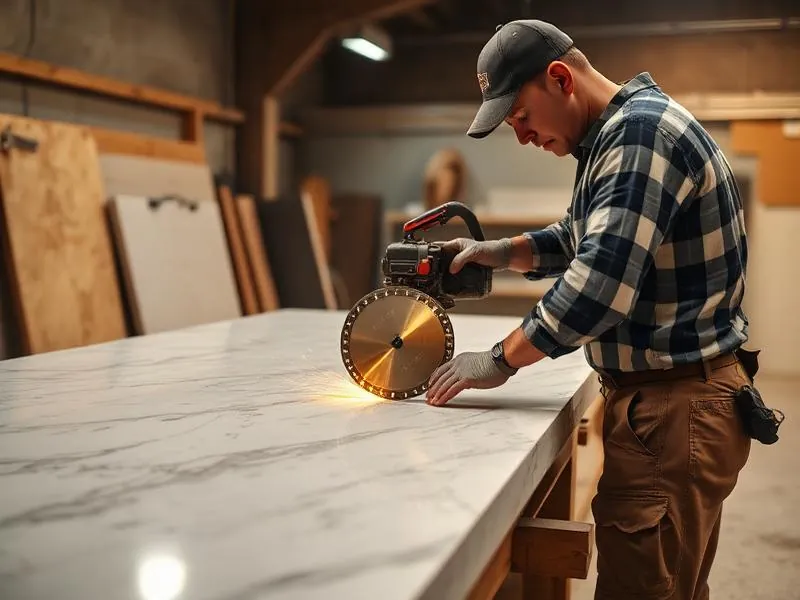
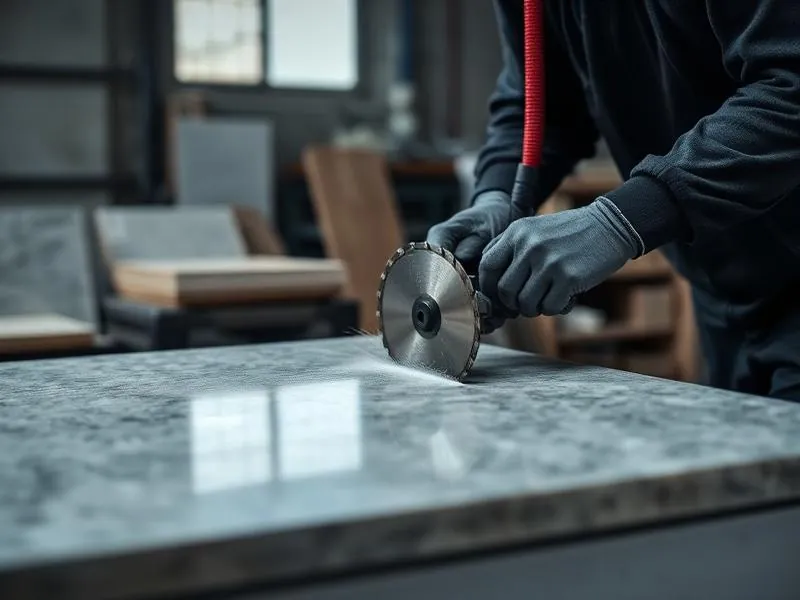
Ultra-compact surfaces are among the most demanding materials a shop can work with. Successful fabrication depends on:
- Careful handling: large thin slabs need proper A-frames, vacuum lifters and full support to avoid breakage.
- Flat, clean cutting tables: any debris or uneven support can crack a slab.
- Dedicated tooling: blades, core bits and CNC tools rated for ultra-compact materials.
- Controlled feed: slower cutting speeds, especially at the start and end of each cut.
- Radius inside corners: drilled corners on sink and cooktop cutouts to prevent cracking.
- Manufacturer guidelines: each brand publishes fabrication and installation requirements, including overhang and support limits.
For the full process, read our guides on cutting porcelain slabs without chipping and Dekton vs porcelain vs quartz.
Living with Dekton countertops and other ultra-compact surfaces
- Clean with mild soap and water. Most household cleaners are fine, but follow the manufacturer's care guide.
- Protect edges and corners from sharp impacts, which are the most common cause of chips.
- Use cutting boards. The surface resists scratching, but it can dull knives quickly.
Frequently asked questions
Is an ultra-compact surface the same as porcelain?
They are closely related. Both are fired or sintered mineral materials with no resin. Ultra-compact and sintered surfaces generally use different raw material blends and processes that produce an even denser material.
Can ultra-compact surfaces be used outdoors in Canada?
Many products are designed for exterior use, including freeze-thaw conditions. Check the manufacturer's rating for the specific product and application.
Can a chipped ultra-compact countertop be repaired?
Small chips can often be filled with a colour-matched adhesive, though repairs may be more visible than on granite or quartz. Prevention through careful handling and edge protection is best.
Why are ultra-compact countertops harder to fabricate?
Their extreme hardness and density make them brittle. They require specialized tooling, slower cutting and careful support to avoid chipping and cracking.
Tooling for ultra-compact surfaces
Browse our Dekton blades, porcelain tooling and core bits. Check each listing’s exact material rating; CNC products are not currently listed. Compare the exact product’s listed materials and machine requirements before selecting tooling. Contact us with any questions. Request a quote.
Dekton is a registered trademark of Cosentino. Neolith and Lapitec are trademarks of their respective owners. Devgon Industries is not affiliated with these manufacturers.