How to Cut Porcelain Slabs Without Chipping or Cracking
By Devgon Industries ·
Large-format porcelain slabs have become one of the fastest-growing surfaces in Canadian kitchens, bathrooms and commercial projects. They are also one of the least forgiving materials to fabricate. A chipped edge or a crack running from a sink cutout can turn an expensive slab into scrap.
The good news is that most porcelain failures come from a short list of avoidable causes. This guide covers how to cut porcelain slabs cleanly: the blade, the setup and the technique that professionals use.
How to cut porcelain slabs: why they chip and crack
Porcelain is fired at very high temperatures, which makes it extremely hard, dense and brittle. It does not flex. Any vibration, heat, uneven support or aggressive cutting action is released as a chip at the edge or a crack through the slab.
Some porcelain slabs also carry internal tension from manufacturing. When a cut releases that tension unevenly, the slab can crack even when the blade and technique are correct.
Step 1: Use a blade made for porcelain
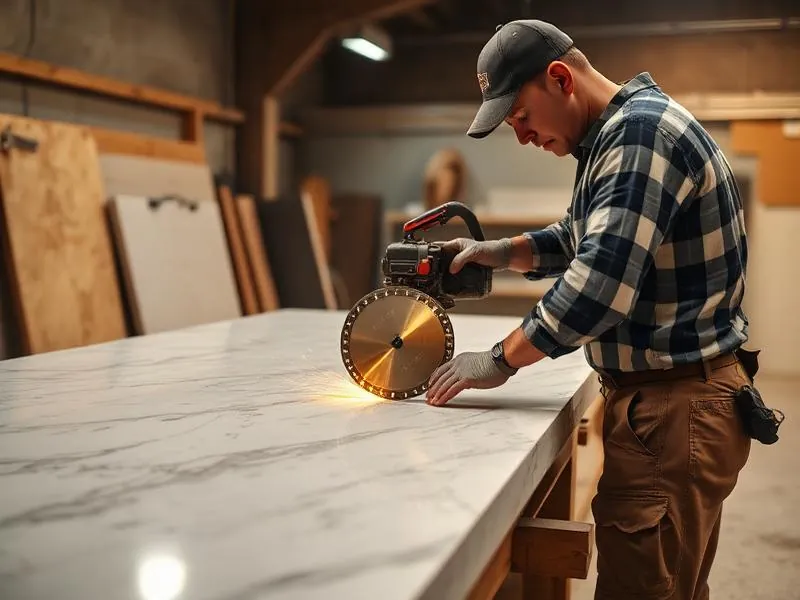
Standard granite or concrete blades are too aggressive for porcelain. Use a thin continuous rim or fine mesh turbo blade designed specifically for porcelain and ultra-compact materials. These blades grind rather than tear the material, which keeps the edge clean.
Porcelain also tends to glaze blades. If cutting slows down or the blade feels smooth, dress it on a dressing stone to expose fresh diamond. A glazed blade forces you to push harder, and pushing harder causes chipping. See our porcelain blades.
Step 2: Support the slab completely
- The slab must lie fully flat and supported along its entire length. Any gap under the slab lets it vibrate or flex during the cut.
- Use a clean, flat cutting table, ideally with a sacrificial board or rubber mat.
- Clear debris from the table before every slab. A single chip of stone under a slab can create a pressure point that cracks it.
Step 3: Release edge tension where recommended
Some porcelain slab manufacturers recommend trimming a few centimetres off the slab edges before making any other cuts. This releases tension stored near the edges and reduces the risk of cracks during later cuts. Always check the slab manufacturer's fabrication guidelines, since recommendations differ between brands and thicknesses.
Step 4: Control the feed speed
Most chipping happens where the blade enters and exits the slab.
- Slow at the start: enter the slab at a reduced feed until the blade is fully into the material.
- Steady in the middle: keep a consistent feed. Stopping and starting mid-cut leaves marks.
- Slow at the end: reduce speed again for the final part of the cut so the edge does not break out.
- Never force it: if the blade is struggling, the blade needs dressing or the feed is too fast.
Step 5: Keep the water flowing
Water cools the blade and the porcelain, flushes away slurry, and controls dust. Low water flow leads to heat, and heat leads to chipping and blade glazing. Check nozzles before each cut.
Cutting sinks, cooktops and inside corners
Inside corners are where most porcelain cracks start. Sharp corners concentrate stress, and saw overcuts make it worse.
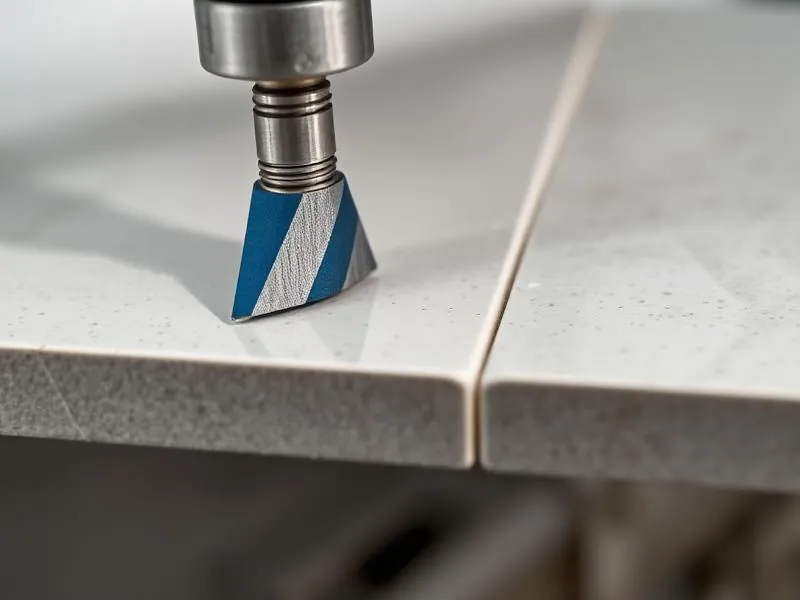
- Drill the corners first: use a diamond core bit to drill a radius at each inside corner before connecting the cuts. Follow the slab manufacturer's minimum radius.
- Never overcut a corner: stop each saw cut at the drilled hole. An overcut creates a weak point where cracks begin.
- Support the cutout: make sure the waste piece is supported so it does not drop and snap the slab as the last cut finishes.
See our diamond core bits and our core drill bits guide.
Cutting mitres on porcelain
Mitred edges are popular with porcelain because they hide the body of the slab. Use a blade suited to mitre cutting, reduce the feed speed, and keep the slab fully supported along the cut. Many fabricators leave a very small flat on the face edge rather than cutting to a knife edge, which is fragile and chips easily.
Cutting porcelain tile on site
- Straight cuts: a quality manual score and snap tile cutter gives clean straight cuts on most porcelain tile.
- Wet tile saw: best for clean cuts, notches and thicker tile. Use a porcelain blade and feed slowly.
- Angle grinder: useful for L-cuts and notches. Use a porcelain blade, make shallow passes, and position the tile so the blade exits on the waste or back side, where chipping matters least.
- Holes: use a vacuum brazed core bit with light pressure and a little water.
Troubleshooting porcelain cuts
| Problem | Likely cause | Fix |
|---|---|---|
| Chipping along the top edge | Wrong blade or feed too fast | Use a porcelain blade and slow the feed |
| Chipping at the end of the cut | No slowdown on exit | Reduce feed for the final part of the cut |
| Blade slowing down | Blade glazed | Dress the blade on a dressing stone |
| Crack from a sink corner | Sharp corner or overcut | Drill corner radii first and never overcut |
| Crack mid-slab | Uneven support or internal tension | Check table flatness and follow edge trimming guidance |
Silica safety
Cutting porcelain releases respirable crystalline silica dust. Wet cutting, dust control and proper respiratory protection protect you and your crew. Follow your provincial occupational health and safety requirements.
Frequently asked questions
What is the best blade for cutting porcelain slabs?
A thin continuous rim or fine mesh turbo blade made specifically for porcelain and ultra-compact surfaces. Standard stone blades are too aggressive and cause chipping.
Why do porcelain slabs crack during cutting?
The common causes are uneven support under the slab, sharp or overcut inside corners, too much feed speed, and internal tension in the slab. Following the manufacturer's fabrication guide addresses most of these.
Can I cut porcelain with a regular angle grinder?
Yes, with a blade made for porcelain. Make shallow passes, keep the grinder steady, and plan the cut so any chipping lands on the waste side.
Is Dekton cut the same way as porcelain?
The approach is similar, but ultra-compact surfaces like Dekton are even harder and usually need blades designed specifically for them. See our Dekton cutting blades.
Get the right porcelain tooling
Browse our porcelain blades, core bits and polishing pads, or read our bridge saw blade guide. Compare the exact product’s listed materials and machine requirements before selecting tooling. Contact us with any questions. Request a quote.